3d Printed Metallic Glass Components Increase Electric Motor Efficiency

3D printed metallic glass components let motor buyers optimize efficiency and reduce battery dependencies.

03.09.26 2 min

Briefing

European Union researchers have used laser-based metal 3D printing to produce electric motor parts from metallic glass, giving industrial buyers a path toward smaller motors that rely less on large battery packs. Replacing standard crystalline steel laminations with amorphous alloys cuts internal heat generation and energy loss. In battery-powered equipment, this yields an efficiency gain of up to 5 percent, lowering the volume of specialty copper and steel needed in standard motor assemblies.
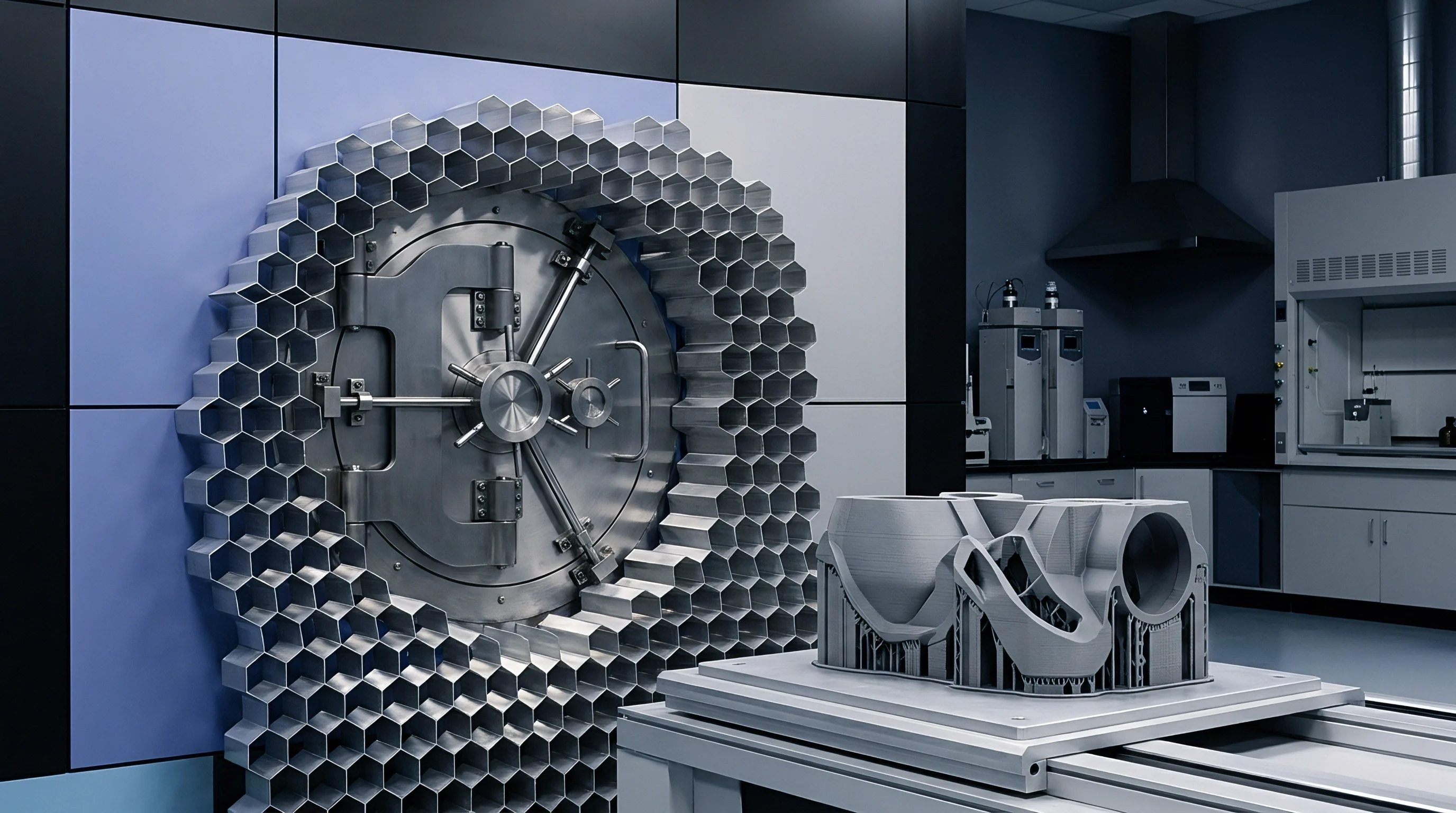
Metallic printed component rests on a motorized platform inside a production laboratory adjacent to a heavy vault door surrounded by hexagonal honeycomb lattice structures.

Context

Procurement teams routinely track power draw and weight limits because electric motors account for over 50 percent of all industrial electricity used in the European Union. Sourcing managers have typically focused on monitoring premium electrical steel prices and tweaking mechanical designs for marginal gains. The broader question was whether a material change could bypass the limits of standard metal laminations without driving up manufacturing labor costs.
Automated sorting mechanisms operate over a conveyor belt carrying small white and blue polymer pellets through a controlled industrial factory environment.

Analysis

Conventional metals develop ordered crystal structures as they cool, forming physical boundaries that resist magnetic shifts and waste energy as heat. Metallic glass freezes into a disordered atomic structure instead, behaving like a frozen liquid where magnetic fields shift with very little resistance. Researchers printed these components using laser powder bed fusion, melting metal powder with a laser and cooling it fast enough to prevent crystallization. That eliminates labor-intensive stamped steel laminations, though it relies on dedicated laser machine time. Higher upfront fabrication costs for the component are balanced across the system by requiring smaller, lighter batteries to hit the same operating runtime.

A polished glass lens rests upon a textured slate block atop a brick base beside a metal rod and a blue reference tab.

Parameters

  • Efficiency Gain ~ Up to 5 percent potential improvement in motor efficiency using printed metallic glass parts.
  • EU Motor Energy Share ~ 50 percent of all electricity consumed in the European Union is used by electric motors.
  • Ecodesign Annual Savings ~ 106 TWh of electricity targeted for annual savings by 2030 through efficiency policies.
  • Research Project End Date ~ February 2026, marking the completion of the AM2SoftMag initiative.

An empty glass vessel rests atop a piece of folded denim fabric within a dark office setting featuring shelves of files and digital market monitors.

Outlook

Moving from lab prototypes to commercial supply chains hinges on scaling up laser powder bed fusion production. Sourcing teams will need to follow full-motor validation trials to see if lower iron losses hold up under sustained heat and mechanical stress. Announcements and filings from major European motor makers about AM2SoftMag materials will indicate whether the alloy is heading toward standard production schedules.
A studio photograph presents a white polymer prototype model featuring copper wiring secured horizontally beneath a fast moving aircraft shape.

Verdict

Engineers should begin talking with additive manufacturing suppliers to assess metallic glass as a long-term option for shrinking motor and battery footprints.

Signal Acquired from: Horizon Magazine

Nomenclature

Additive Manufacturing

Production Economics ~ Industrial fabrication based on material deposition operates through digital solid modeling files sent directly to thermal or binder jetting equipment.

3d Printing

Additive Manufacture ~ Manufacturing techniques involving the sequential joining of materials to create objects from three-dimensional model data belong to the additive category.

Motor Components

Thermal Dynamics ~ Mechanical assemblies convert electrical current into kinetic force within industrial machinery while generating continuous heat dissipation during operation.

Soft Magnetic Alloys

Magnetic Classification ~ Ferromagnetic materials exhibiting low coercivity and high initial magnetic permeability magnetize and demagnetize efficiently under alternating electromagnetic fields.

Energy Efficiency

Operational Ratio ~ Industrial performance is measured through energy efficiency when output volume divides directly into kilowatt hours consumed over a specific accounting period.

Industrial Manufacturing

Material Transformation ~ Large-scale mechanical and chemical processes that turn raw materials into finished products drive the global economy.

Industrial Procurement

Commercial Practice ~ Strategic sourcing, vendor qualification, commercial contracting and direct purchasing supply the capital equipment, raw materials and operational services needed for factory manufacturing.

Electric Motors

Conversion Device ~ Electromechanical machines transform electrical energy into mechanical rotational power via magnetic field interactions across an air gap.

Parts Fabrication

Manufacturing Workflow ~ Manufacturing processes transform raw material stock into distinct geometric components through subtractive or additive operations.

Metallic Glass

Amorphous Solid ~ Amorphous solid represents a class of noncrystalline substances featuring a disordered atomic structure that lacks the long range periodicity found in conventional crystals.

Amorphous Metals

Structural State ~ Non-crystalline metallic solids produced through rapid cooling lack the long-range atomic order found in conventional metals.

Material Science

Physical Investigation ~ Scientific disciplines dedicated to exploring the relationship between the atomic structure of matter and its macroscopic properties provide the theoretical basis for industrial manufacturing.

What the firm knows, published

Expertise is a utility, not a secret. sentiention™ publishes its working knowledge as open reference: intelligence layer covering the materials it sources, the markets it enters, and the reference that serves both.