Transformer Steel Deficit Extends Lead Times for Grid Equipment Buyers

Sourcing desks must prepare for multi-year lead times and higher equipment prices as electrical steel supplies remain tight.

08.09.26 2 min

Briefing

A persistent shortage of grain-oriented electrical steel is constricting power transformer manufacturing, leaving buyers to navigate long lead times and strict allocation quotas. Driven by simultaneous grid modernization and data center buildouts, lead times have stretched to 128 weeks for standard units and up to four years for specialized generator step-up transformers. The bottleneck stems from high market concentration, where heavy processing requirements and limited mill capacity cannot keep pace with demand.

Securing delivery now requires procurement teams to abandon spot purchasing in favor of reserving production slots years in advance. Projections indicate the cumulative global transformer shortfall will reach 1,699 gigavolt-amperes by 2028.
Digital render shows gray concrete blocks supporting a server enclosure, a diagnostic testing unit, and a metal exhaust stack under overcast skies.

Context

Before the severity of the deficit was recognized, procurement planning assumed mills would scale electrical steel capacity alongside the broader energy transition. Buyers tracked general steel benchmarks under the assumption that localized plant debottlenecking would ease delivery friction, weighing whether to pause capital spending until material prices followed traditional cyclical declines.
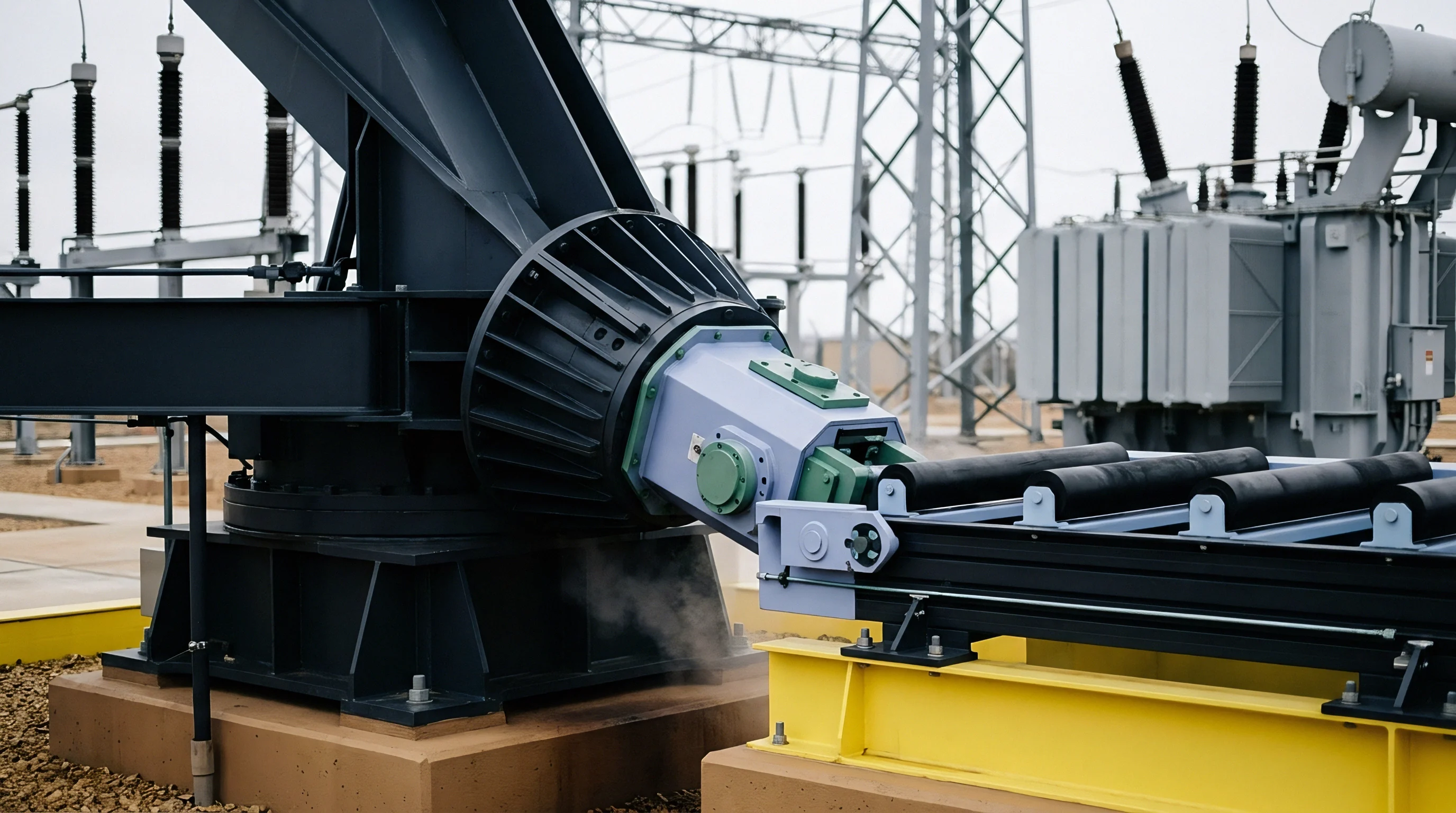
High voltage electrical substation components feature a mechanical pivot assembly mounted on steel beams near industrial transformers and insulators.

Analysis

Manufacturing grain-oriented electrical steel requires specialized metallurgical controls and heavy capital expenditure to achieve the unidirectional grain alignment necessary to prevent core energy loss. Standard structural grades cannot substitute for transformer cores without unacceptable heat dissipation. Supply elasticity remains exceptionally low: only one domestic producer operates in the United States, alongside a small group of qualified mills worldwide.

This narrow base restricts total transformer output as utility and data center demand surges. The imbalance has pushed finished transformer prices up 77 percent since 2019, while primary producers continue to enforce strict allocation minimums that exclude non-contract volume.

A fractured composite material sample rests inside a dark industrial display grid surrounded by various architectural surface finishes.

Parameters

  • Lead time for standard units ~ 128 weeks on average for standard power transformers.
  • Lead time for generator step-up units ~ 144 weeks, with complex units reaching four years.
  • Transformer price escalation ~ 77 percent average increase across power transformers since 2019.
  • Electrical steel cost increase ~ 60 to 70 percent rise in grain-oriented electrical steel prices since 2020.
  • Cumulative supply deficit ~ 1,699 gigavolt-amperes projected across high-voltage transformers by 2028.

A miniature steel electricity pylon model connects via thin filaments to a dark mineral lump resting inside an industrial workshop.

Outlook

Procurement teams need multi-year capacity agreements to secure factory queue positions rather than counting on intermediate price softening. Key near-term variables include trade actions and mill expansion milestones, notably regional trade cases like the Indian Directorate General of Trade Remedies investigation initiated on June 22, 2026, which may restrict import availability and drive further price increases.
A gloved worker uses a metal scribe to apply identifying marks onto a cast component inside an active production facility.

Verdict

Buyers must secure multi-year manufacturing agreements and pay premiums to lock in transformer production slots before steel shortages freeze their expansion timelines.

Signal Acquired from: IndustrialSage

Nomenclature

Grain-Oriented Electrical Steel

Crystal Alignment ~ Iron-silicon alloys processed to align magnetic domains along a preferred rolling direction form the functional core material of high-efficiency transformers.

Heavy Electrical Manufacturing

Industrial Output ~ Heavy electrical manufacturing produces high-capacity capital assets including large power transformers, high-voltage switchgear, and utility-scale generators that form the backbone of electrical grids.

Electricity Distribution Equipment

Network Function ~ Step-down transformers, switchgear, protective relays and reclosers operating between regional substations and end-user connections comprise the physical apparatus of power delivery networks.

Transformer Steel

Material Grade ~ Specialized silicon steel produced with precise magnetic crystal orientation forms the core substrate for electrical energy transformation apparatus.

Cold-Rolled Grain-Oriented Steel

Magnetic Property ~ Mill-scale production of cold-rolled grain-oriented steel depends on high-temperature annealing processes that align the crystal lattice of silicon-iron alloys along the rolling direction to minimize magnetic core losses.

Manufacturing Raw Materials

Material Classification ~ Inputs represent unprocessed physical substances extracted from natural environments or synthesized from basic chemical precursors that production cycles transform into finished goods.

Utility Equipment Procurement

Capital Acquisition ~ Purchasing processes for heavy machinery and infrastructure components allow power and water companies to expand or maintain their service networks.

Power Grid Hardware

Physical Componentry ~ Structural fittings, insulators, conductors and hardware assemblies form the physical framework supporting high-voltage power transmission networks.

Power Generator Procurement

Contract Specification ~ Formal purchasing protocols for industrial prime movers and utility-scale turbogenerators establish technical performance baselines and delivery schedules.

Industrial Steel Supply

Production Capacity ~ Volume output from blast furnaces and electric arc furnaces forms the material foundation for global manufacturing and construction infrastructure.

Electrical Steel

Material Chemistry ~ Specialized iron alloys containing silicon exhibit unique magnetic properties that are critical for the generation and distribution of electrical energy.

Core Laminate Materials

Lamination Structure ~ Ferromagnetic alloy sheets joined in layered stacks form the structural base of electromagnetic transformer and motor assemblies.

What the firm knows, published

Expertise is a utility, not a secret. sentiention™ publishes its working knowledge as open reference: intelligence layer covering the materials it sources, the markets it enters, and the reference that serves both.